WhatsApp Business message charges: what Nigerian businesses need to know
If you run a small business and use the WhatsApp Business app to communicate with customers, there is a new change you should know about.
From October 1, 2026, Meta started charging businesses for certain messages sent through the WhatsApp Business Platform. This is important for Nigeria small business tech, because many businesses now depend on WhatsApp for customer support, order updates and other everyday communication.
However, there is one important thing to understand first: this change does not apply to the normal WhatsApp app or the standard WhatsApp Business app. It affects businesses using the WhatsApp Business Platform, also known as the WhatsApp Business API.
What changed?
Previously, businesses using the WhatsApp Business Platform could send certain service messages without paying Meta for each message.
That changed on October 1.
Meta now charges businesses for delivered service messages. Utility messages sent in response to customers within the 24-hour customer-service window are also chargeable.
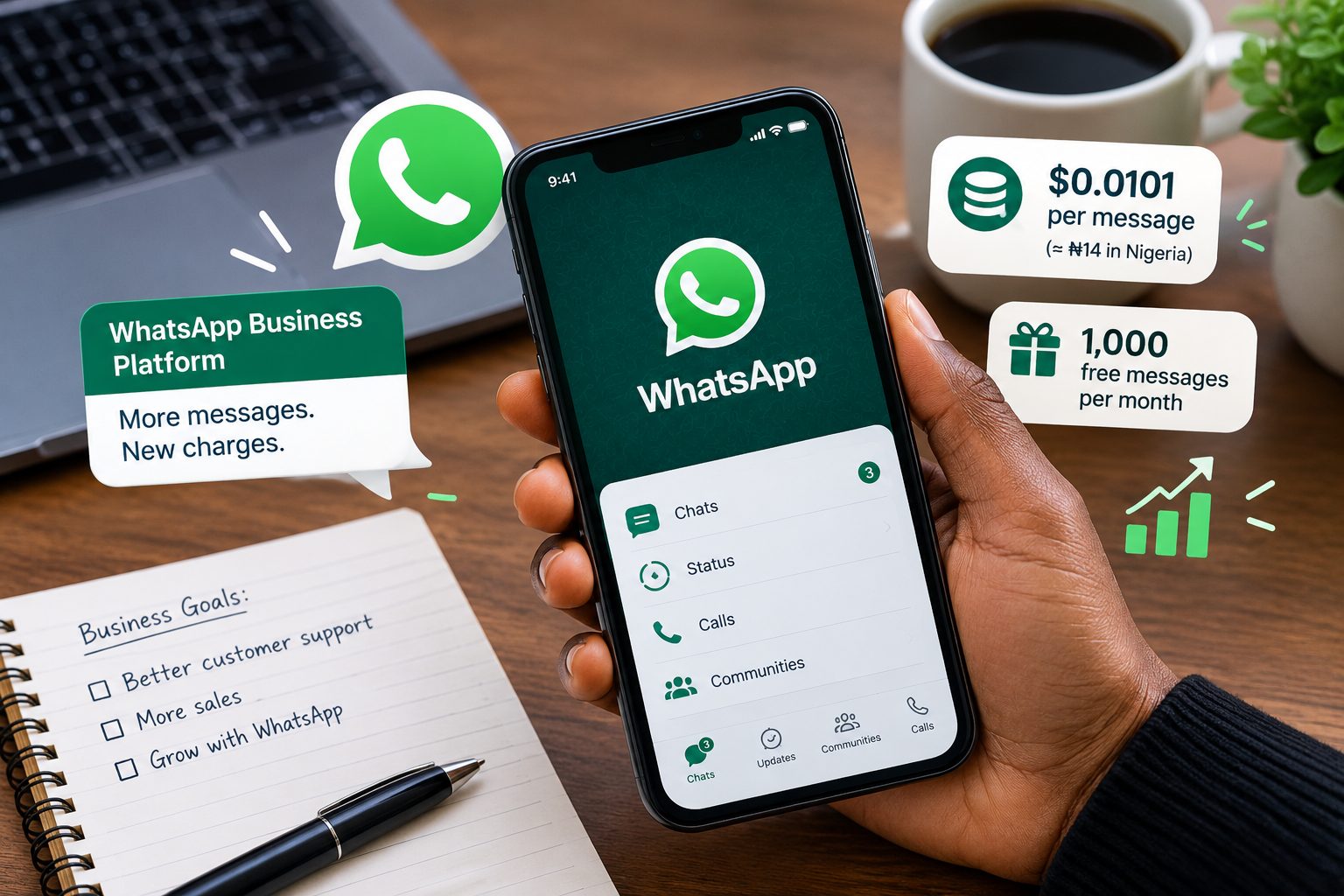
In Nigeria, the current service-message rate is about $0.0101 per delivered message, which is roughly ₦14. The actual naira amount can change because exchange rates change.
Each business phone number also gets 1,000 free service messages every month. Once those free messages are used, the business starts paying for additional chargeable service messages.
This is where Meta messaging pricing becomes important for businesses that send large numbers of messages.
Who will feel the change the most?
Not every business using WhatsApp will be affected.
If you simply use the WhatsApp Business app on your phone to chat with customers, you do not suddenly have to pay Meta for every reply.
The businesses most likely to feel the change are those using the WhatsApp Business Platform with tools such as customer relationship management systems, chatbots, online stores and other software.
Banks, fintech companies, online retailers, logistics companies and other businesses that handle large volumes of customer messages could therefore see their communication costs increase.
Why should Nigerian businesses care?
For a small Nigerian vendor, ₦14 may not sound like much. But when a business sends thousands of messages, those small charges can quickly add up.
For example, after using the 1,000 free service messages, 10,000 delivered service messages would leave 9,000 chargeable messages. At $0.0101 per message, that would be about $90.90 in Meta fees before any additional costs from a software provider or Business Solution Provider.
This is why WhatsApp Business charges should be considered when a business is planning to automate customer communication.
A business should know whether it is using the free WhatsApp Business app or the paid Business Platform before assuming that Meta's new pricing applies to it.
Businesses already using the Platform should also check how many messages they send each month and review their software provider's fees.
For smaller vendors, the main lesson is simple: do not panic just because you heard that WhatsApp now charges businesses. If you are using the regular WhatsApp Business app, this particular change does not mean you will suddenly be charged for chatting with your customers.
But if your business uses the WhatsApp Business Platform to handle customer communication at scale, it is worth checking your message volume and planning for the new costs.
As Nigeria small business tech continues to grow, understanding these changes can help business owners avoid unexpected bills and make better decisions about the tools they use.
Sources
Version 1.0. Kobo Daily stories are edited before publication and updated as facts change. Spotted an error? Tell our editors.