WACS repair matters for internet across West Africa
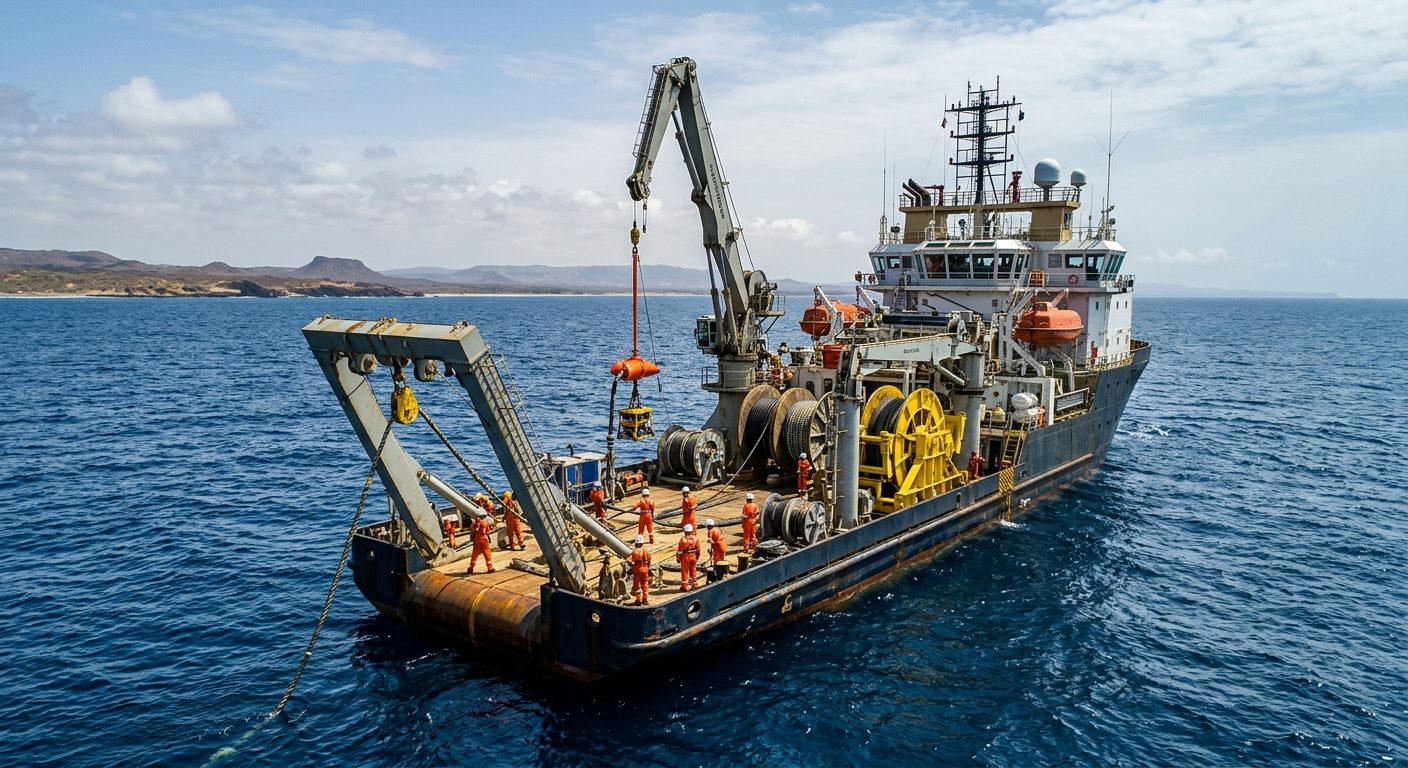
Most people rarely think about the cables running beneath the ocean when they use the internet. Yet these connections help keep businesses, schools, banks and communication services running every day. That is why the expected repair of a damaged section of the West Africa Cable System (WACS) matters to countries across West and Central Africa.
In a November 10, 2026 report, Techpoint Africa said a repair vessel was expected to reach the affected area on November 11 to begin work on the damaged submarine cable. Congo Telecom reported that the fault was detected on October 29 and affected a section linking the Democratic Republic of Congo (DRC) and the Republic of Congo.
Although the exact location of the damage had not been disclosed, technical teams had isolated the affected section and were preparing for the repair. The development is important because WACS carries internet traffic between Europe and Africa.
What Is the WACS Cable System?
WACS, short for West Africa Cable System, is a fibre-optic cable laid beneath the Atlantic Ocean. It stretches approximately 14,500 kilometres, connecting Portugal to South Africa along the western coast of Africa.
A simple way to understand it is to think of the cable as a highway for internet information. When someone sends an email, joins a video meeting or visits a website hosted in another country, information can travel through these underwater connections.
WACS has landing stations in several African countries, including Nigeria, Ghana, Côte d'Ivoire, Cameroon, Gabon, the Democratic Republic of Congo and the Republic of Congo.
These connections help telecommunications companies move large amounts of data between countries and international networks. Without them, internet providers would have fewer routes available for handling international traffic.
Why the Repair Matters
A damaged submarine cable can put pressure on internet networks, particularly when alternative connections have limited capacity. Internet providers may need to redirect traffic through other routes to keep their customers connected.
For everyday users, problems with international connectivity can sometimes appear as slower browsing, interrupted video calls or difficulties accessing online services. Businesses that depend on reliable connections may also experience delays.
However, the latest incident does not mean that every WACS-connected country has experienced an internet outage. Techpoint reported that Congo Telecom customers had not experienced service interruptions because automatic failover systems redirected traffic through alternative connections.
This is an important detail. Backup routes allow internet providers to keep services running when their usual connection develops a problem, although relying on fewer routes can increase pressure on the remaining infrastructure.
The repair vessel's expected arrival was therefore an important step towards restoring the affected cable connection and improving network resilience.
Which African Countries May Feel the Impact?
The WACS network has landing stations in Nigeria, Ghana, Côte d'Ivoire, Cameroon, Gabon and both the Democratic Republic of Congo and the Republic of Congo.
These countries are connected to an important international internet route, but the effect of a cable fault can differ depending on the network arrangements of individual operators and the availability of alternative connections.
For example, a business in Nigeria may continue operating normally if its internet provider has sufficient backup capacity. In another location, users could experience slower services if alternative routes are limited.
This is why submarine cable Africa infrastructure matters beyond the companies that own or maintain it. Reliable international connections support online banking, remote work, education, communication and other everyday activities.
The report also points to a wider problem: cable faults are not new to the region. In January 2026, another WACS fault disrupted internet services in the DRC. Earlier, in August 2023, the system experienced another outage.
The March 2024 undersea cable failures were particularly significant, affecting WACS, ACE, SAT-3 and MainOne and causing widespread internet disruption across parts of West Africa. A suspected underwater landslide was blamed for that incident.
These previous events show why the region needs stronger backup infrastructure and more diverse cable routes.
What Happens Next?
The immediate concern is the repair of the damaged section and the restoration of the affected connection. According to the Techpoint report, the vessel was expected to arrive on November 11, although the report did not confirm that the repair had been completed.
For internet users, the story is a reminder that reliable connectivity depends on infrastructure that most people never see. A problem beneath the ocean can have consequences for people working, studying or running businesses thousands of kilometres away.
As internet use continues to grow across Africa, maintaining submarine cables and investing in alternative routes will become increasingly important. Keeping these connections reliable helps businesses operate, families communicate and people access the digital services they depend on.
Sources
Version 1.0. Kobo Daily stories are edited before publication and updated as facts change. Spotted an error? Tell our editors.