**Solarise Africa Wins $1.12m Grant for Uganda and Zambia Expansion**
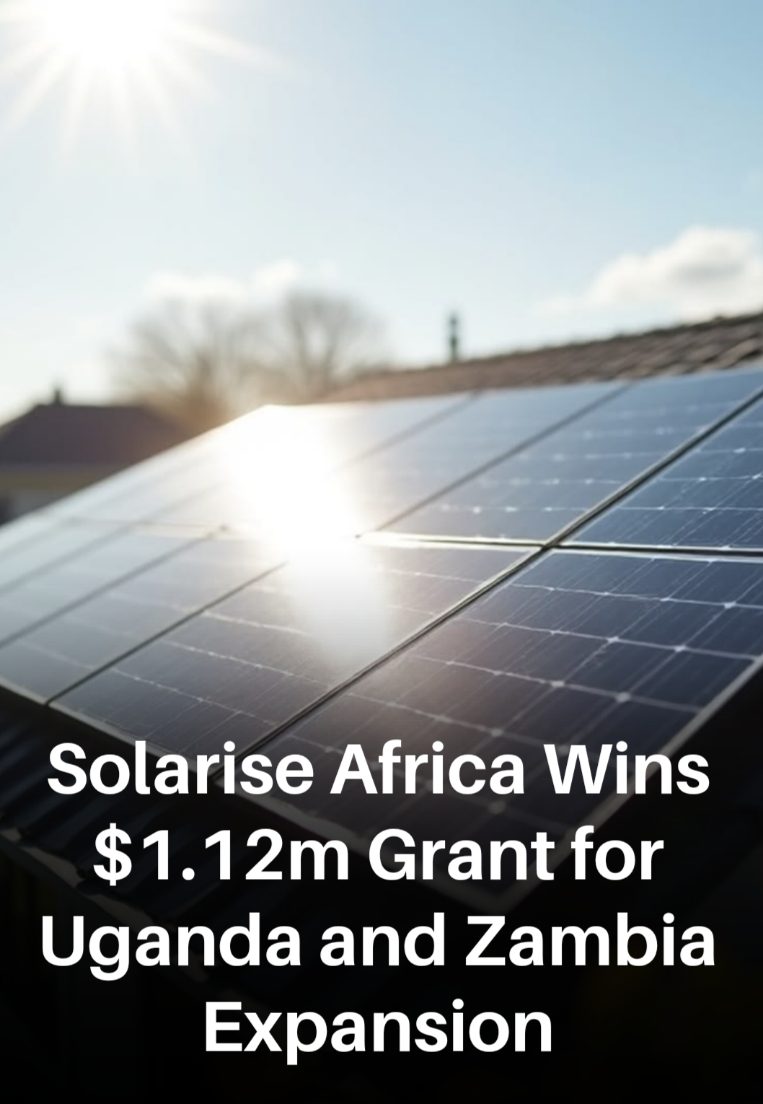
Kenyan energy company Solarise Africa has secured a $1.12 million grant to expand its solar energy business into Uganda and Zambia, as demand for reliable and affordable electricity creates opportunities for clean energy startups across Africa.
The funding, awarded by the Energy and Environment Partnership Trust Fund (EEP Africa), will help the company establish operations in both countries and provide renewable energy solutions to businesses and social institutions. According to Disrupt Africa, the grant is worth €1 million and forms part of a larger expansion programme expected to run for 24 months.
Solarise Africa will contribute an additional €1 million of its own funding, bringing the programme's total budget to €2 million. The money will support the installation of 3 megawatts (MW) of new renewable energy capacity, including solar panels and battery storage systems. Heat pumps may also be installed where appropriate.
##Expanding Into Two New Markets
Founded in 2018, Solarise Africa helps businesses access renewable energy without necessarily having to pay the full installation cost upfront.
The company combines energy equipment with financing arrangements, engineering, maintenance and energy management services. This approach allows businesses to adopt solar power while preserving money for other operational needs.
Its expansion into Uganda and Zambia will involve setting up local operations, developing partnerships and identifying projects that can benefit from renewable energy.
The company expects the installations under the programme to generate at least 4.5 gigawatt-hours (GWh) of renewable electricity. The projects are also expected to avoid approximately 3,600 tonnes of carbon dioxide emissions, according to the programme's targets.
These targets show that the expansion is about more than entering new markets. Solarise Africa also aims to demonstrate that its business model can work in different African countries while providing practical energy solutions.
##Why Energy Startups Are Attracting Attention
Access to reliable electricity remains an important challenge for businesses in many African markets. Power interruptions and high energy costs can disrupt production, increase operating expenses and make it difficult for companies to grow.
Solar energy offers an alternative, particularly for businesses that need a dependable electricity supply during working hours. Battery storage can also help keep equipment running when solar generation is unavailable.
However, the cost of purchasing and installing solar equipment can discourage businesses from making the switch. Companies such as Solarise Africa address this problem by combining energy technology with financing options.
Grant funding can help startups test their business models, establish operations in new markets and attract additional private investment. For clean energy companies, this support can be particularly important because projects often require significant upfront spending before generating long-term returns.
The expansion could also create opportunities for technicians, engineers, installation teams and maintenance workers in Uganda and Zambia. Businesses may benefit from more reliable electricity, while increased use of renewable energy could reduce dependence on fossil-fuel-powered backup generators.
##Building for Long-Term Growth
Solarise Africa's grant highlights the role of funding and business partnerships in expanding clean energy access across the continent.
The company will need to establish effective local operations, develop a strong customer base and deliver projects that meet its energy and environmental targets.
If successful, the expansion could provide a foundation for further investment and demonstrate how African energy startups can grow beyond their home markets.
For Uganda and Zambia, the initiative offers another potential source of renewable energy infrastructure. For Solarise Africa, it is an opportunity to extend its business model into two additional markets and help more organisations access reliable, cleaner electricity.
Version 1.0. Kobo Daily stories are edited before publication and updated as facts change. Spotted an error? Tell our editors.