SA YOUTH SUPPORTS 4.7 MILLION YOUNG PEOPLE AS UNEMPLOYMENT PERSISTS
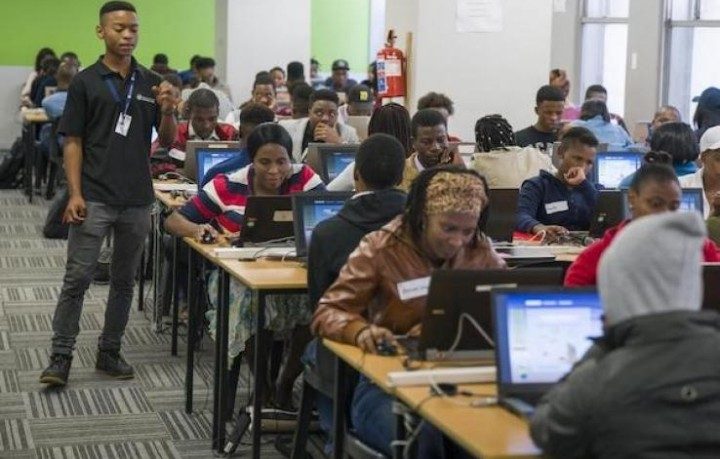
South Africa's SA Youth platform has supported more than 4.7 million young people with employment and skills development opportunities since its inception, addressing youth unemployment South Africa continues to battle.
The online youth employment platform, which is approaching six million registered users, connects job seekers with employers, training programmes, entrepreneurship opportunities and career support resources.
According to Sibahle Malinga's November 23, 2026 ITWeb business tech report, the platform has also assisted more than 3,000 businesses, ranging from small, medium and micro enterprises (SMMEs) to large companies, in filling entry-level positions.
SA Youth was officially announced by President Cyril Ramaphosa on June 16, 2021, as part of the Presidential Youth Employment Intervention (PYEI). It operates within the National Pathway Management Network, a public-private partnership connecting young people with employment, training and entrepreneurship opportunities.
Hanlie de Bod-Leaf, Chief Information Officer of Harambee Youth Employment Accelerator, which manages the platform, said SA Youth was developed to address barriers young people face when searching for work. These include the cost of mobile data, transport expenses and limited access to information about available opportunities.
The platform allows young people to discover and apply for opportunities through their mobile devices without paying data charges to access its services.
WHO USES THE PLATFORM?
SA Youth serves two main groups: young people seeking opportunities and employers looking for entry-level talent.
For job seekers, it provides access to vacancies, skills development programmes, entrepreneurship pathways and career support. Its mobile CV feature, introduced in June 2025, allows users to compile and download CVs using their phones.
The feature recognises experience beyond formal employment, including volunteering, entrepreneurial activities and skills acquired through informal work.
For employers, an online portal allows organisations to advertise vacancies, training programmes and learning opportunities. Algorithms recommend relevant opportunities to candidates based on factors such as experience and location, while employers receive ranked candidate lists to help identify applicants whose skills and qualifications match their requirements.
Organisations registering to publish opportunities are vetted to protect young people from fraudulent listings. Users can also report suspicious opportunities for investigation.
BEFORE vs AFTER: REDUCING BARRIERS TO EMPLOYMENT
BEFORE: Young people faced costs associated with mobile data and transport, alongside limited information about available opportunities. Employers could also become discouraged by large application volumes, sometimes receiving files containing 1,000 CVs.
AFTER: SA Youth provides data-free access to opportunities through mobile devices, while its matching system helps employers identify candidates whose experience and skills fit their requirements.
One example of the platform's reach came through a partnership with the Department of Basic Education. Harambee reports that more than 1.3 million young people were helped to apply, without data charges, for school and general assistant positions at more than 23,000 schools across South Africa in just 21 days.
AI, SKILLS AND THE YOUTH UNEMPLOYMENT CHALLENGE
Harambee is exploring artificial intelligence tools to improve the experience of job seekers and employers, including interview preparation support. However, De Bod-Leaf said the organisation was approaching the technology cautiously.
She explained that products under testing were intended to improve the job-search experience rather than make decisions about how candidates are ranked. The organisation is particularly conscious that young people using the platform already face socio-economic barriers and should not be disadvantaged by automated systems.
The need for effective employment pathways remains urgent. Statistics South Africa's figures, reported by ITWeb, put the unemployment rate among people aged 15 to 34 at 47.3% in the third quarter of 2026, representing approximately five million unemployed young people. Among those aged 15 to 24, the rate was 63.6%.
Harambee's own impact figures show that more than 1.7 million young people have been connected to earning opportunities, alongside over 3,500 employer partners. These figures are distinct from the 4.7 million work-seekers supported by the organisation.
De Bod-Leaf also noted that SA Youth helps young people access opportunities beyond permanent employment, including short-term programmes that provide work experience.
The distinction matters because platform registrations and work-seeker support do not automatically translate into permanent jobs. Harambee's figures show the scale of its reach, while the number connected to earning opportunities provides a separate measure of progress.
For South Africa, the challenge is to turn that reach into more opportunities for young people to gain experience, earn income and move towards sustainable employment.
Version 1.0. Kobo Daily stories are edited before publication and updated as facts change. Spotted an error? Tell our editors.