SA Holds Rates And Warns Pause May Not Last
South Africa's central bank has chosen to hold interest rates steady, but its message is clear: this is a pause, not a victory for borrowers. The South African Reserve Bank (SARB) announced on Thursday, 19 November 2026…
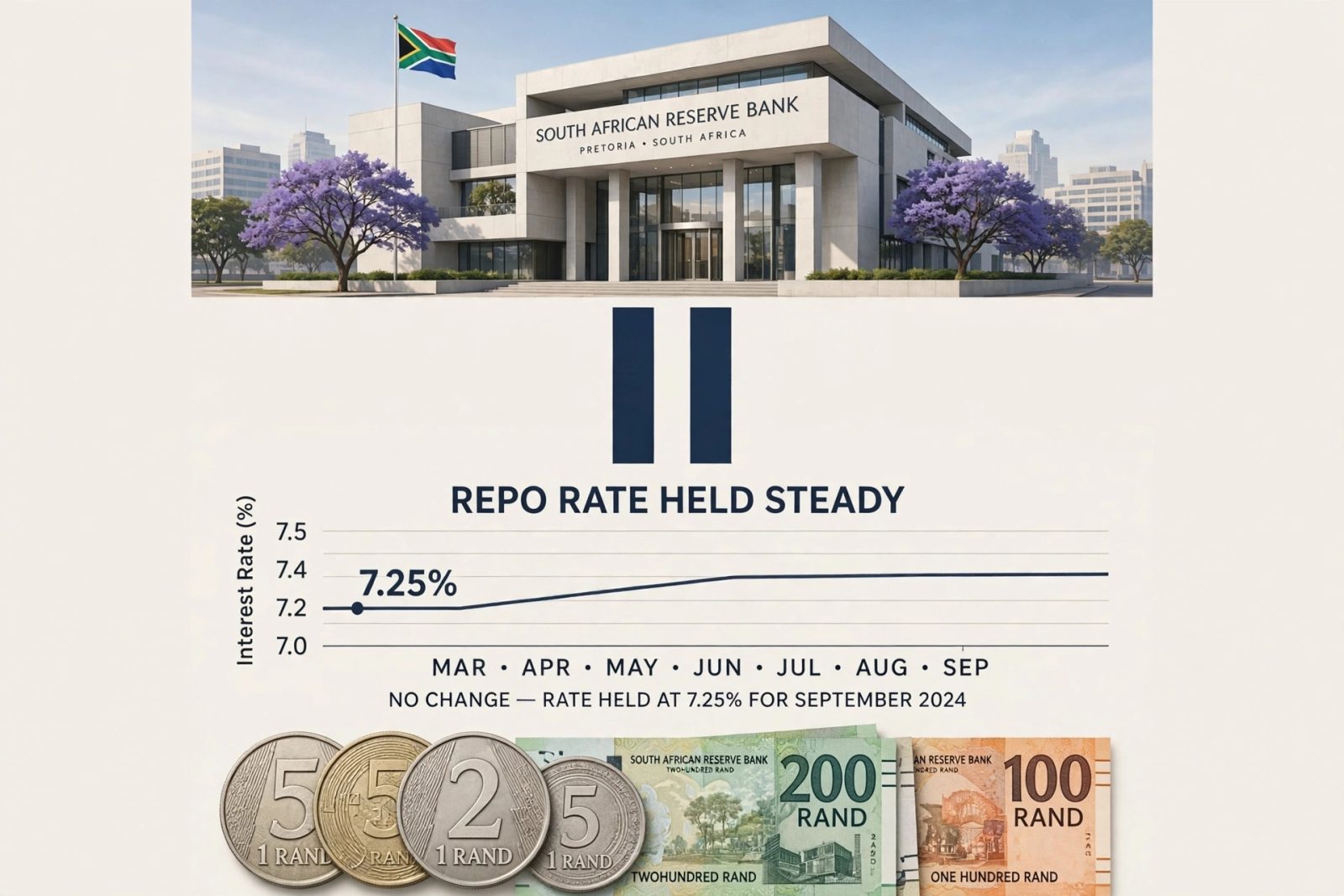
South Africa's central bank has chosen to hold interest rates steady, but its message is clear: this is a pause, not a victory for borrowers.
The South African Reserve Bank (SARB) announced on Thursday, 19 November 2026, that its Monetary Policy Committee (MPC) voted to keep the repo rate unchanged at 7.25%. That decision means the prime lending rate stays at 10.75%.
A Close Vote Shows Division
The vote was unusually close. Four members voted to hold rates, while three members wanted another increase of 25 basis points. The split shows just how divided policymakers are about inflation and the cost of borrowing.
Governor Lesetja Kganyago described the decision as a cautious pause. He said that after two rate increases earlier this year, monetary policy is already moderately restrictive. The committee decided to pause for now, but it will not hesitate to raise rates if needed to return inflation to target.
Why Inflation Still Matters
That warning matters because inflation is still rising. Annual consumer inflation jumped to 5.2% in October, up from 4.5% in September. It is now well above the Bank's 3% target and at its highest level since May 2024.
The main driver is fuel. Surging fuel costs linked to geopolitical tensions have pushed up transport prices, which then feed into food prices, rent, and everyday goods. The Bank expects inflation to stay above 5% into early 2027 before easing.
What It Means For People With Loans
For people with loans, the decision brings temporary relief, but no real help. If you have a home loan, car loan, or personal loan linked to prime, your monthly repayment will not go up this month, but it will also not go down.
- Home loan: Repayments stay the same, no cut
- Car loan: Monthly instalment stays the same
- Personal loan: No extra pain for now, but no relief either
For example, a household paying R10,152 a month on a R1 million home loan at prime will keep paying the same amount. For families already struggling with food, fuel, and school fees, that is not a cut, it is simply no extra pain for now.
What Could Happen Next
The Bank also warned about new risks:
- Weaker rand could make imports more expensive
- Higher oil prices could push fuel even higher
- Dry conditions linked to El Niño could damage harvests and push food inflation up
Economists say the next move is more likely to be up than down. Some expect a 25 basis point hike at the next meeting on 28 January 2027 if inflation does not cool. For now, South Africans should plan as if rates will stay high, save where they can, and avoid new expensive debt.
Version 1.0. Kobo Daily stories are edited before publication and updated as facts change. Spotted an error? Tell our editors.