Power Minister’s Promise Keeps Electricity Talk Alive
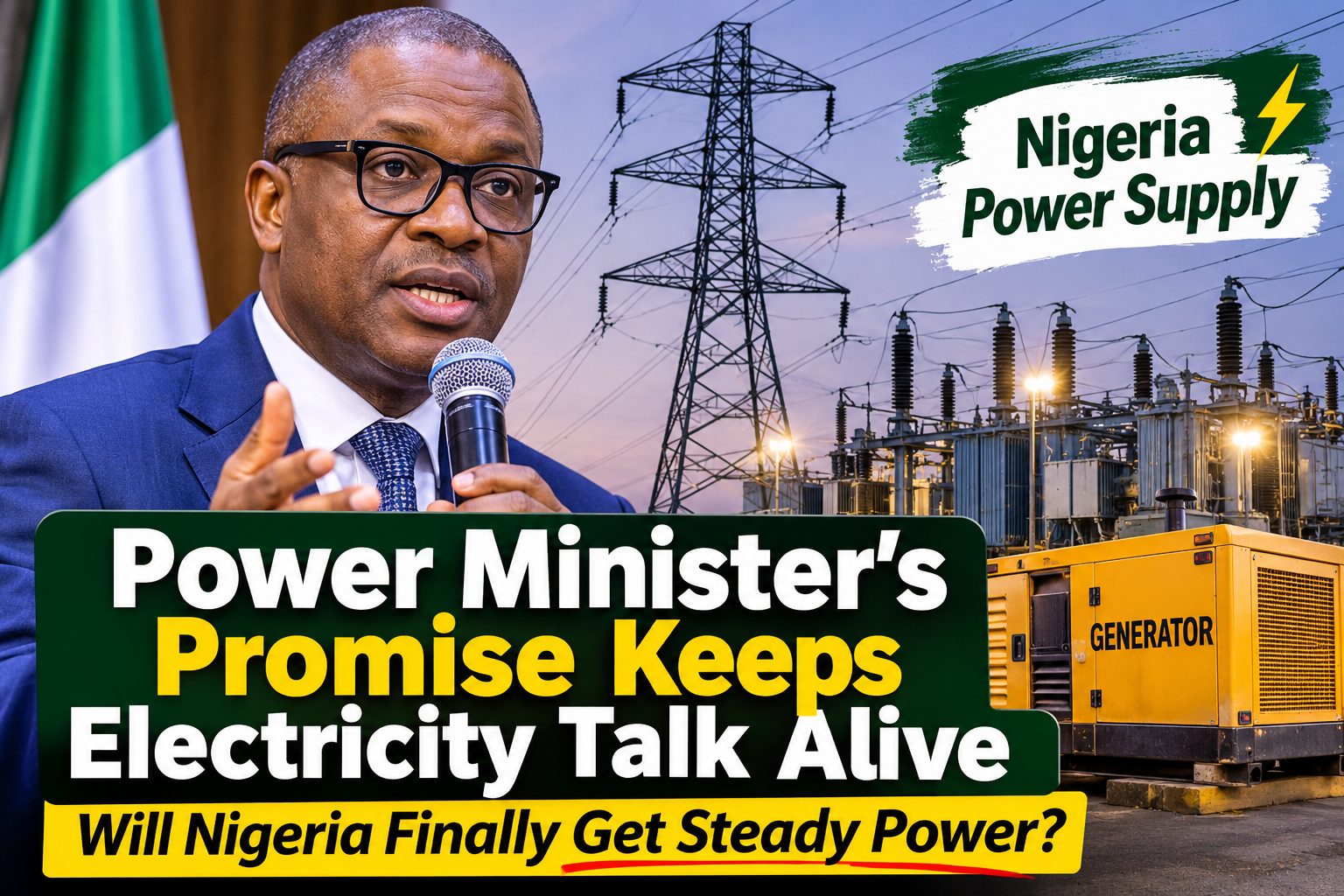
Nigeria’s electricity challenges have returned to the spotlight after the Minister of Power, Joseph Tegbe, assured Nigerians that he and his team were working to restore electricity supply in areas affected by recent outages.
The promise comes as households and businesses in several parts of the country continue to experience reduced power supply. For many Nigerians, the situation means spending more money on generators, fuel and other alternatives.
The minister’s announcement has renewed public interest in Nigeria power supply, with many consumers waiting to see whether the government’s efforts will bring noticeable improvements.
What The Power Minister Promised
In a statement reported by BusinessDay on November 7, 2026, Tegbe said the government was working with electricity sector operators to restore affected generating units in phases.
He promised that the first units would return to service within 48 to 72 hours.
The minister attributed the recent electricity shortage to planned maintenance at Egbin Power Station, inadequate gas supply to some thermal power stations and sabotage of important transmission lines.
He also said the government was working with operators to improve gas supply and speed up repairs to damaged infrastructure.
The affected areas include Lagos and the Federal Capital Territory, alongside other locations experiencing electricity disruptions.
How Poor Electricity Affects Nigerians Daily
Unreliable electricity remains a major challenge for Nigerian households and businesses.
When power supply becomes irregular, families often have to depend on generators to keep their homes running. This increases household expenses, particularly when petrol prices are already putting pressure on budgets.
Small businesses also feel the impact. Barbers, hairdressers, restaurants, shops and other businesses that depend on electricity must spend additional money on fuel or risk losing customers during outages.
Students and remote workers also struggle when electricity interruptions affect their ability to study, charge devices or complete important tasks.
For these reasons, Nigeria power supply is more than a government policy issue. It directly affects the daily lives and income of millions of people.
What Nigerians Want To See Next
Although the minister's promise offers some hope, Nigerians will want to see actual improvements rather than another announcement.
The immediate expectation is that the affected generating units will return within the promised 48-to-72-hour period and that electricity distribution will improve.
Consumers will also be looking for:
- More consistent electricity supply across affected states.
- Faster repairs to damaged transmission lines.
- Improved gas supply to power generation plants.
- Clear communication from the Ministry of Power.
- Long-term solutions to prevent repeated electricity shortages.
The power minister Nigeria has given Nigerians a timeline, but the real test will be whether electricity becomes more reliable after the restoration efforts.
As the latest electricity news Nigeria continues to attract attention, households and businesses will be watching closely to see whether the government's promise translates into meaningful changes.
For Nigerians who have endured repeated power interruptions, reliable electricity is what matters most.
Sources
Version 1.0. Kobo Daily stories are edited before publication and updated as facts change. Spotted an error? Tell our editors.