**Onafriq Shuts Down Baxi: What Will Nigeria’s POS Agents Do Next?
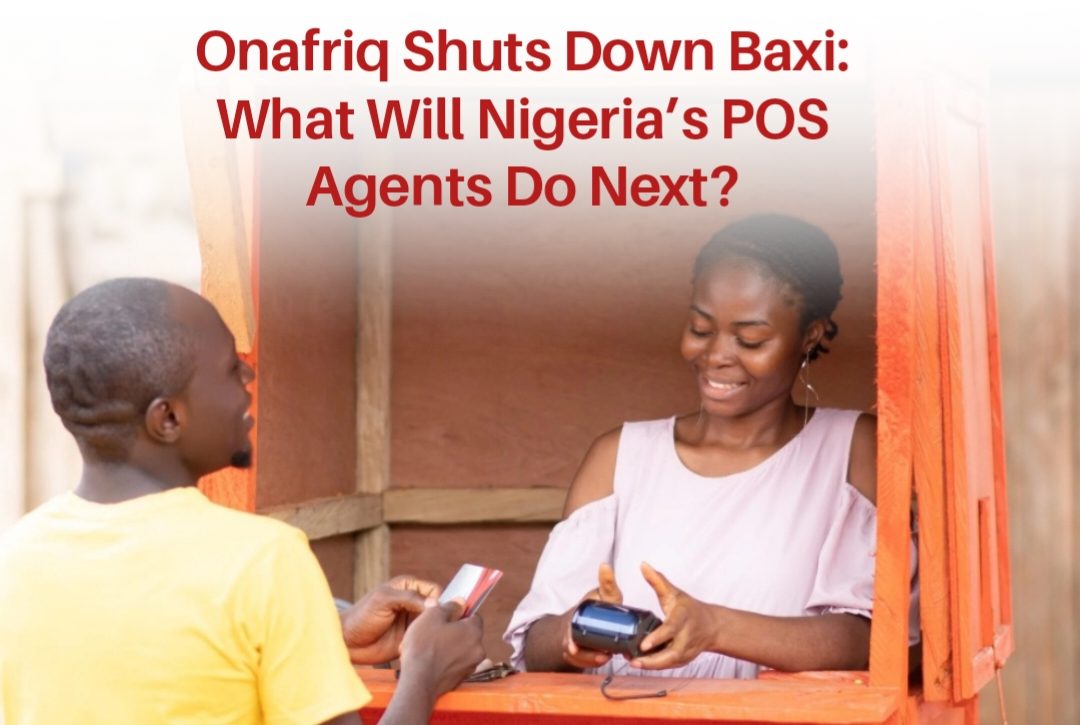
Onafriq’s decision to wind down its Baxi agent banking business in Nigeria has left point-of-sale (POS) agents facing an important question: what happens to their businesses now?
Announced on October 16, 2026, the decision marks the end of Onafriq’s participation in Nigeria’s agent banking segment under the Baxi brand. The company has given agents 30 days to transfer their funds to their preferred principal bank, creating an immediate need for affected operators to plan their next steps.
For many agents, POS operations are more than an additional source of income. They provide cash withdrawals, transfers, bill payments and other essential financial services to customers who may not have convenient access to bank branches. A disruption to these services could affect both small business owners and the communities that depend on them.
However, the shutdown does not necessarily mean that every affected agent must abandon the business. The immediate priority is to complete the transition safely, understand the available alternatives and determine whether continuing in agent banking remains financially worthwhile.
##Why Is Onafriq Shutting Down Baxi?
According to reports by PUNCH and Premium Times, Onafriq attributed its decision to rising operating costs, inflation, naira depreciation and increasing competition in Nigeria’s payment services market.
The company said changes in the business environment since 2024 had affected transaction volumes and the cost of operating its offline agent banking network. The growing popularity of instant account-to-account transfers has also changed how customers conduct financial transactions, while competition has put additional pressure on profit margins.
Onafriq entered Nigeria’s agent banking market in 2021 through its acquisition of Capricorn Digital Limited, the company behind Baxi. It continued investing in the business through 2023 to expand its agent network.
However, after reviewing the operation’s long-term sustainability, the company concluded that winding down the business was the appropriate decision.
Onafriq founder and chief executive officer Dare Okoudjou acknowledged the difficult nature of the move, noting that it affects employees, agents and business partners who helped build the network.
Importantly, the company clarified that the decision applies to its Nigerian agent banking business and does not represent a complete exit from the country. Onafriq intends to continue its payments network and card-issuing services.
The announcement therefore creates two separate issues: the company’s strategic decision to leave this segment and the practical challenge facing agents who must reorganise their operations.
##What Should Affected POS Agents Do First?
The first step for Baxi agents is to establish exactly how the transition affects their individual accounts and businesses.
Onafriq has stated that agents onboarded through the Baxi platform have been transitioned to another principal bank. It has also instructed them to move their funds to their preferred principal bank within 30 days.
Agents should contact Onafriq through its official communication channels to confirm the arrangements applicable to their accounts. They should establish the precise deadline, the procedure for transferring their balances and whether any outstanding transactions or settlement issues require attention.
They should also reconcile their transaction records, confirm their available balances and retain evidence of relevant transactions and communications. Where a transfer is delayed or an amount does not match their records, agents should seek clarification before assuming that the issue has been resolved.
The 30-day window should not be treated as a reason to wait until the final days. Beginning the process early gives operators more time to address technical problems and avoid unnecessary disruption.
Agents should also be cautious about unsolicited messages claiming to offer faster transfers or alternative accounts. They should verify instructions through official channels and never disclose passwords, PINs or one-time verification codes to people claiming to assist with the transition.
##Can POS Agents Switch to Another Provider?
Yes, continuing in agent banking may be an option, but agents should assess potential providers carefully before making a commitment.
Nigeria has a broad agent banking ecosystem involving banks and other authorised financial service providers. An affected Baxi agent could explore whether a suitable arrangement is available through a licensed institution that supports the transactions their customers use most frequently.
However, switching should involve more than obtaining another POS terminal. Operators need to understand the provider’s onboarding requirements, transaction charges, commissions, settlement procedures, customer support and rules for managing their working capital.
For example, an agent whose customers frequently withdraw cash needs to understand how easily the new arrangement will allow them to maintain sufficient cash and electronic balances. An operator who processes numerous transfers and bill payments may place greater importance on transaction reliability and competitive charges.
Agents should also confirm whether they need a new terminal, a separate business account or additional documentation. They should ask about terminal costs, maintenance fees, transaction limits and the procedure for resolving failed transactions.
The Central Bank of Nigeria’s revised Guidelines for the Operations of Agent Banking in Nigeria, issued in October 2025, are also relevant. The framework includes requirements governing agent banking relationships, with agent exclusivity and location requirements scheduled to take effect from April 1, 2026.
Consequently, agents should not assume they can operate under multiple competing principal institutions simultaneously. Before signing a new agreement, they should confirm the applicable regulatory requirements and ensure that the proposed arrangement complies with the rules.
The CBN’s published guidelines provide an important starting point for understanding the regulatory framework.
Will Switching Platforms Cost Agents More Money?
The cost of moving to another provider is an important consideration, particularly for operators already dealing with tight profit margins.
Depending on the arrangement, agents may need to pay for a terminal, meet onboarding requirements, provide working capital or adjust their existing business processes. The actual costs will vary by provider, so agents should obtain clear information before committing their money.
They should compare the total cost of operating under a new arrangement with the commissions they realistically expect to earn. A platform that offers a low terminal fee may not necessarily be the most profitable option if its transaction charges are higher or its services are unreliable.
Agents should also consider how much money they need to maintain daily operations. Their working capital must support customer withdrawals and transfers while leaving enough cash available for other business expenses.
Rather than switching immediately to the first available provider, operators should compare suitable options and ask existing agents about their experiences. They should pay particular attention to service reliability, settlement delays and the quality of customer support.
For small businesses, an unsuitable switch could replace one operational problem with another.
##What Does the Shutdown Mean for Customers?
Customers who depend on Baxi agents may experience changes as operators transition to new arrangements.
In communities where banking branches are limited or inconvenient to reach, POS agents provide an accessible way to withdraw cash, transfer money and complete everyday financial transactions. These services can be particularly important for traders, transport workers, small business owners and people who need quick access to cash.
If an agent temporarily suspends operations while changing platforms, customers may have to visit another outlet or use alternative banking channels.
However, the closure of Baxi’s agent banking business does not mean that POS services across Nigeria are ending. Agents operating through other authorised arrangements can continue serving customers, subject to the requirements of their respective providers.
Customers should therefore confirm that an outlet is operating normally before initiating transactions. They should also check transaction receipts and account balances, particularly when a transaction fails or a reversal is expected.
For agents, communicating clearly with regular customers about any temporary interruption can help maintain trust while the business transitions.
##What the Decision Says About Nigeria’s Agent Banking Industry
Onafriq’s withdrawal from agent banking highlights the financial pressures facing businesses operating in Nigeria’s payments market.
Inflation, currency depreciation, rising operating expenses and competition can make it difficult for operators to maintain sustainable margins. At the same time, the growth of digital transfers is changing how consumers access financial services.
Although digital banking provides customers with additional choices, physical agents remain important for people who need cash or require assistance with transactions. The challenge for providers is to maintain a business model that can serve these needs while covering operational costs.
The CBN’s agent banking framework also demonstrates the importance of compliance, proper agent relationships and service quality as the sector evolves.
Onafriq’s decision does not establish that every agent banking business is unsustainable. Rather, it illustrates the need for providers and operators to understand their costs, transaction patterns and customers’ needs.
For individual agents, the lesson is practical: choosing a platform should involve more than brand recognition. Reliability, transparent fees, regulatory compliance and sustainable earnings all matter.
##What Happens Next?
For affected Baxi agents, the immediate priorities are clear: confirm the transition arrangements, transfer their funds within the specified period, reconcile outstanding transactions and assess their options for continuing business.
Onafriq has said its teams will provide support and guidance during the transition. Agents who encounter difficulties should use the company’s official communication channels rather than relying on unverified instructions.
The company has also said it will consult employees whose roles are connected to the agent banking business and support them through the transition.
Ultimately, the shutdown creates uncertainty, but it does not automatically bring an end to the livelihoods of every agent involved. The outcome for individual operators will depend on how effectively they manage the transition, the alternatives available to them and whether they can continue operating profitably.
For Nigeria’s POS agents, the next 30 days will be an important period for protecting their funds, making informed decisions and preparing their businesses for the next stage of the country’s changing payments landscape.
Version 1.0. Kobo Daily stories are edited before publication and updated as facts change. Spotted an error? Tell our editors.