Nigeria inflation slows again to 14.63%
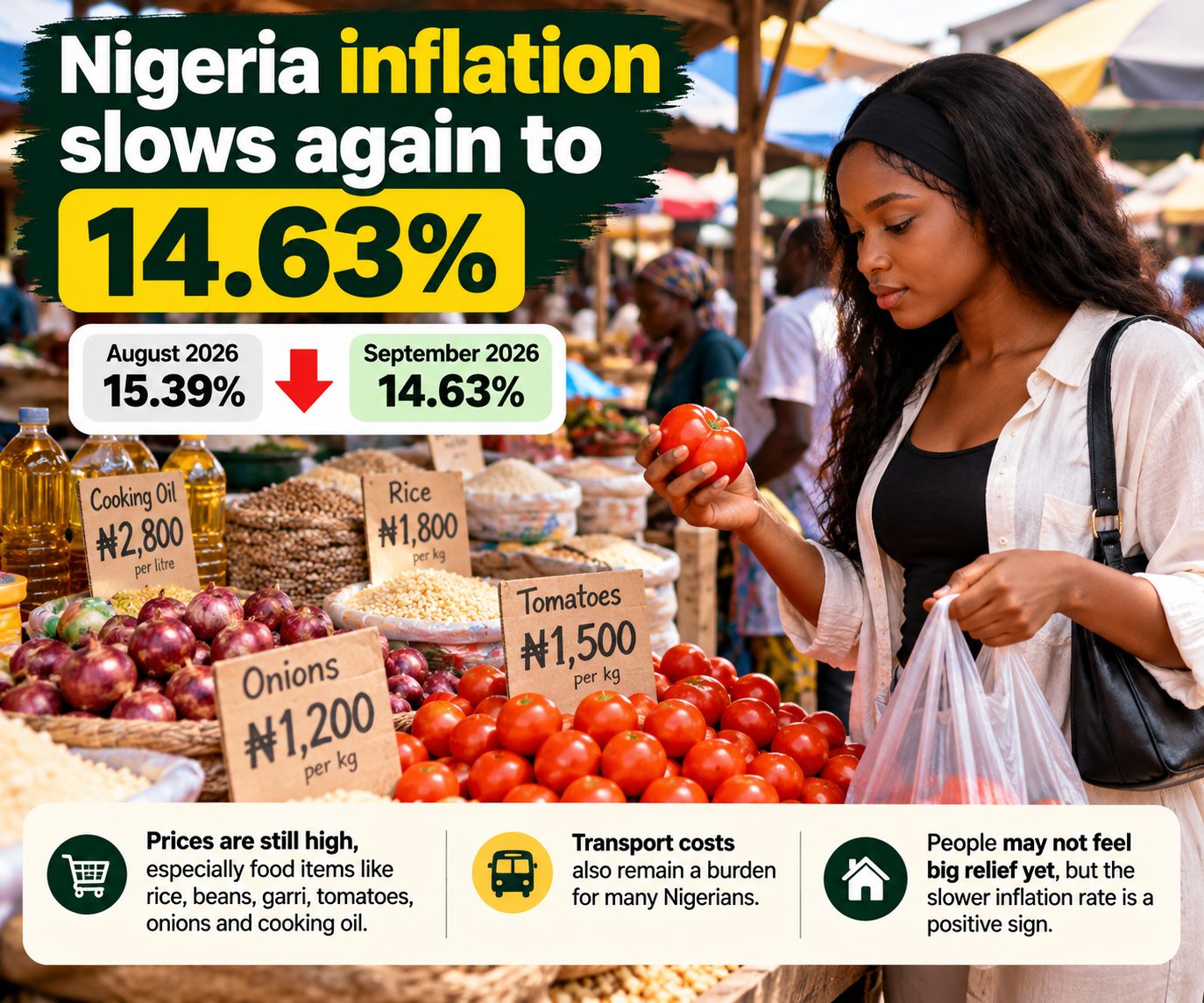
Nigeria’s inflation rate eased to 14.63% in September 2026, down from 15.39% in August, according to data from the National Bureau of Statistics (NBS), reported by Premium Times on October 15. The decline offers some positive news for households still struggling with the cost of living in Nigeria.
The latest figure shows that inflation continues to slow. However, this does not necessarily mean that everyday goods and services have become cheap. It means that, on average, prices are increasing more slowly than before.
###Food Prices Remain a Major Concern
Despite the decline in overall inflation, food remains a significant pressure on household budgets. Annual food inflation stood at 19.59% in September, compared with 19.57% in August.
For ordinary Nigerians, this means buying rice, beans, garri, tomatoes, onions and cooking oil can still take a substantial share of their income. Families may continue adjusting their shopping lists, buying smaller quantities or choosing cheaper alternatives to manage their expenses.
Transport and energy costs also affect daily spending. When commuters pay for buses or other transport services, even small increases can put additional pressure on their budgets. The cost of cooking and running a household can make it harder for families to feel the benefits of lower inflation.
###Will Nigerians Feel Relief Yet?
The latest figures suggest that inflationary pressure is easing, but meaningful relief may take time to reach consumers.
For example, a family that previously spent more on food may not immediately find that its usual shopping basket costs less. Traders and service providers also do not necessarily reduce prices simply because the inflation rate falls.
However, if inflation continues to slow and household incomes improve, people may gradually find it easier to plan their spending and manage essential expenses.
The September report is therefore encouraging, but it does not mean Nigeria’s cost-of-living challenges have ended. Many households will be watching food prices, transport fares and other everyday expenses to see whether the improvement in the figures translates into real savings.
For now, Nigeria inflation in September 2026 signals a slowdown in rising prices, while the experience of ordinary Nigerians will depend on what they actually pay in markets, shops and on the road.
Sources
Version 1.0. Kobo Daily stories are edited before publication and updated as facts change. Spotted an error? Tell our editors.