##**Nigeria inflation dips again and money talk returns**
Headline inflation falls to 14.06% in October — but why does the market still feel expensive? By [Stephen. E. O] There is good news in the numbers. And there is hard news in the market. Nigeria's headline inflation rate…
##Headline inflation falls to 14.06% in October — but why does the market still feel expensive?
By [Stephen. E. O]
There is good news in the numbers. And there is hard news in the market.
Nigeria's headline inflation rate fell again in October to 14.06%, according to the latest Consumer Price Index (CPI) report from the National Bureau of Statistics (NBS), reported by Premium Times.
That is down from 14.63% in September and down sharply from 18.97% in October 2025. It is the fifth consecutive month of moderation, and the lowest in six years, according to the Minister of Finance.
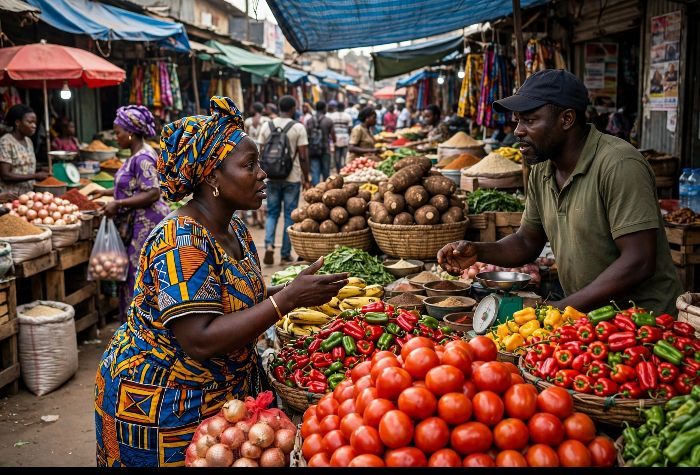
But if you went to Mile 12 market in Lagos, Wuse Market in Abuja, or Oil Mill Market in Port Harcourt this week, you may be asking the same question many Nigerians are asking: If inflation is falling, why is everything still expensive?
That question is the real story.
The New Number, Explained Simply
Inflation does not mean prices are falling. It means prices are rising more slowly than before.
Think of it like a danfo on Third Mainland Bridge.
Last year, the danfo was speeding at 18.97 km/h. In September, it slowed to 14.63 km/h. In October, it slowed again to 14.06 km/h.
It is still moving forward. Prices are still going up. Just not as fast.
The NBS confirmed this in the details:
- Headline inflation (year-on-year): 14.06% in October, down from 14.63% in September.
- Month-on-month inflation: 0.43% in October, up from 0.06% in September — meaning prices actually rose faster within October than within September, even though the yearly rate fell.
- Food inflation (year-on-year): 19.13%, down from 19.59% in September.
- Core inflation (which excludes farm produce and energy): 10.78% year-on-year, down from 21.25% in October 2025.
- Urban inflation: 14.84% year-on-year.
- Rural inflation: 12.17% year-on-year.
The biggest drivers of inflation remain the same things families spend on every day: food and non-alcoholic beverages contributed 5.63 percentage points, followed by restaurants and accommodation services at 1.82 points, and transport at 1.50 points.
What It Means For Families?
For a family, a falling inflation rate is not a discount. It is breathing space.
1. Your money is losing value more slowly.
When inflation was near 19% last October, ₦10,000 in your pocket lost value very fast. If you kept it for a year, you could buy far less with it.
At 14.06%, that loss is slower. It does not make you richer. It makes the ground stop shifting so fast under your feet.
2. Budgeting becomes a little more predictable.
When prices were jumping every week, a mother in Surulere could not plan. This week, a bag of rice is one price. Next week, another.
Slower inflation means she can plan for school fees, transport, and food with slightly more confidence. Traders too can price goods without fearing they will lose money by tomorrow.
3. It gives room for interest rates to fall eventually.
When inflation stays high, the Central Bank keeps interest rates high to fight it. High interest rates make loans expensive for small businesses.
If inflation continues to fall, borrowing could become cheaper over time. That matters for the tailor who wants a new sewing machine, the food vendor who wants a bigger freezer, or the young graduate who wants a loan to start a business.
Private sector leaders welcomed the fall, but warned that improved macroeconomic indicators have yet to translate into meaningful relief for businesses and households.
That is the gap between the NBS office and the market stall.
What Prices May Still Feel High?
This is where the government and the people disagree most.
On Tuesday, Minister of Finance Taiwo Oyedele defended the numbers and said prices will not immediately fall simply because inflation has declined.
He said: "Prices of food items and other goods and services will not immediately fall simply because Nigeria's inflation rate has declined." The decline to 14.06% means prices are still rising, but at a slower rate.
He also admitted many Nigerians distrust government economic data when it suggests improvement.
He is right about the maths — and Nigerians are right about the feeling. Here is why:
1. Food is still the biggest pain — 19.13% higher than last year.
Food inflation is 19.13% year-on-year. That means the average food basket costs almost one-fifth more than it did in October 2025.
A bag of rice that was ₦60,000 last year is not suddenly ₦50,000. It is still around ₦60,000 or more — and in some states, far more.
Food inflation was highest in Ondo (31.74%), Lagos (31.43%) and Imo (29.75%). In Lagos, a state where millions buy food every day and have no farm, that number is not abstract. It is the price of pepper, tomatoes, yam, and garri.
Month-on-month food inflation was -0.75% in October, which does offer some small relief on a monthly basis, but the annual figure shows food prices remain considerably higher than a year earlier.
2. Transport still bites.
Transport contributed 1.50 percentage points to inflation. For a worker in Lagos who takes two buses and a keke to work, or a trader in Onitsha who pays to move goods, transport is not a statistic. It is daily cash out of pocket.
When fuel prices rise or roads are bad, transport fares stay high even if inflation falls.
3. Rent and housing don't follow inflation down.
Housing and utilities contributed 1.18 percentage points. Landlords rarely reduce rent because inflation fell. Once rent goes up in Lagos, Abuja, or Port Harcourt, it stays up. Families feel that every month, not just when NBS releases a report.
4. Different states, different realities.
Headline inflation was highest in Imo (28.66%), Enugu (22.81%) and Kaduna (21.55%), while Taraba (6.12%), Sokoto (6.68%) and Ekiti (7.64%) recorded the lowest.
That means a family in Owerri is living a very different inflation story from a family in Jalingo. The national average hides that pain.
So, Is This Good News Or Not?
Both.
It is good news that the direction is right. Five months of falling inflation is not an accident. It suggests that reforms, tighter monetary policy, and improved food supply are having some effect.
It is also true that direction is not the same as destination. Nigerians do not eat inflation rates. They eat rice, yam, beans, and bread. Until those prices actually stabilise and wages catch up the celebration will feel premature.
For now, the money talk has returned because the number has given people hope again. Hope that the worst of the price storm may be passing. Hope that next month's market trip will not bring another shock.
But as any market woman will tell you: hope does not buy garri. Only naira does.
And until naira stretches further in the market, 14.06% will remain a number on a page — important, encouraging, but not yet felt in the pocket.
FACT BOX: Nigeria Inflation, October 2026
Indicator Rate
Headline inflation (year-on-year) 14.06%
September 2026 14.63%
October 2025 18.97%
Month-on-month 0.43% (up from 0.06% in September)
Food inflation (year-on-year) 19.13%
Core inflation 10.78%
Urban inflation 14.84%
Rural inflation 12.17%
Caption: Prices are rising more slowly, but for many shoppers, food is still almost one-fifth more expensive than last year.
Source: Premium Times — "Nigeria's inflation falls to 14.06% in October – NBS", NBS October 2026 CPI report.
Sources
Version 1.0. Kobo Daily stories are edited before publication and updated as facts change. Spotted an error? Tell our editors.