Nigeria Fact-Check Alert: How Edited Viral Videos Can Mislead the Public
Introduction
Viral videos have become one of the fastest ways information spreads across Nigeria. Every day, thousands of people share videos on WhatsApp, Facebook, TikTok, Instagram and other social media platforms. While some videos show genuine events, others may be edited, taken out of context or shared with misleading descriptions. This can cause confusion, fear and misunderstanding among members of the public.
A video becoming popular online does not automatically make the information attached to it true. Before believing or sharing a viral video, people should take time to check where it came from and whether reliable evidence supports the claim.
What the Viral Claim Said
A recent example of the importance of checking viral content is the video involving the Emir of Daura, Alhaji Faruk Umar Faruk, and a foreign tourist. The video attracted attention online and generated allegations about an alleged assault.
Different descriptions and interpretations of a video can influence how viewers understand what happened. Some people may share a clip with a strong headline without providing the full recording, the original date, the location or reliable evidence to support their explanation.
This is why readers should separate what a video actually shows from what people claim it means.
What the Fact-Check Found
The Gazette News published a fact-check on November 23, 2026, examining the viral video involving the Emir of Daura and the tourist.
The publication reported that its examination found no sign that the video had been generated using artificial intelligence, contrary to a claim circulating online that it was an AI-created fake. The report also examined the allegation surrounding the video.
This is an important distinction: a video being genuine does not automatically prove every allegation or interpretation attached to it. Equally, the absence of evidence that a video was AI-generated does not establish every detail of what happened.
Readers should therefore avoid making conclusions that go beyond the evidence presented in a fact-check. Where information has not been independently confirmed, it should be described as unverified rather than presented as established fact.
The lesson is that fact-checking should examine both the authenticity of the footage and the accuracy of the claims made about it.
Why Misleading Videos Are Dangerous
Misleading videos can damage people's reputations, create unnecessary panic and increase tension in communities. In Nigeria, where information spreads quickly through messaging platforms, an unverified video can reach thousands of people before anyone checks its original source.
For example, an old video may be presented as a recent event. A short clip may leave out important moments that change the meaning of what viewers see. A misleading caption may also make people believe that an individual or organisation made a statement that was never officially confirmed.
When people share such information without checking it, they can unintentionally help misinformation spread.
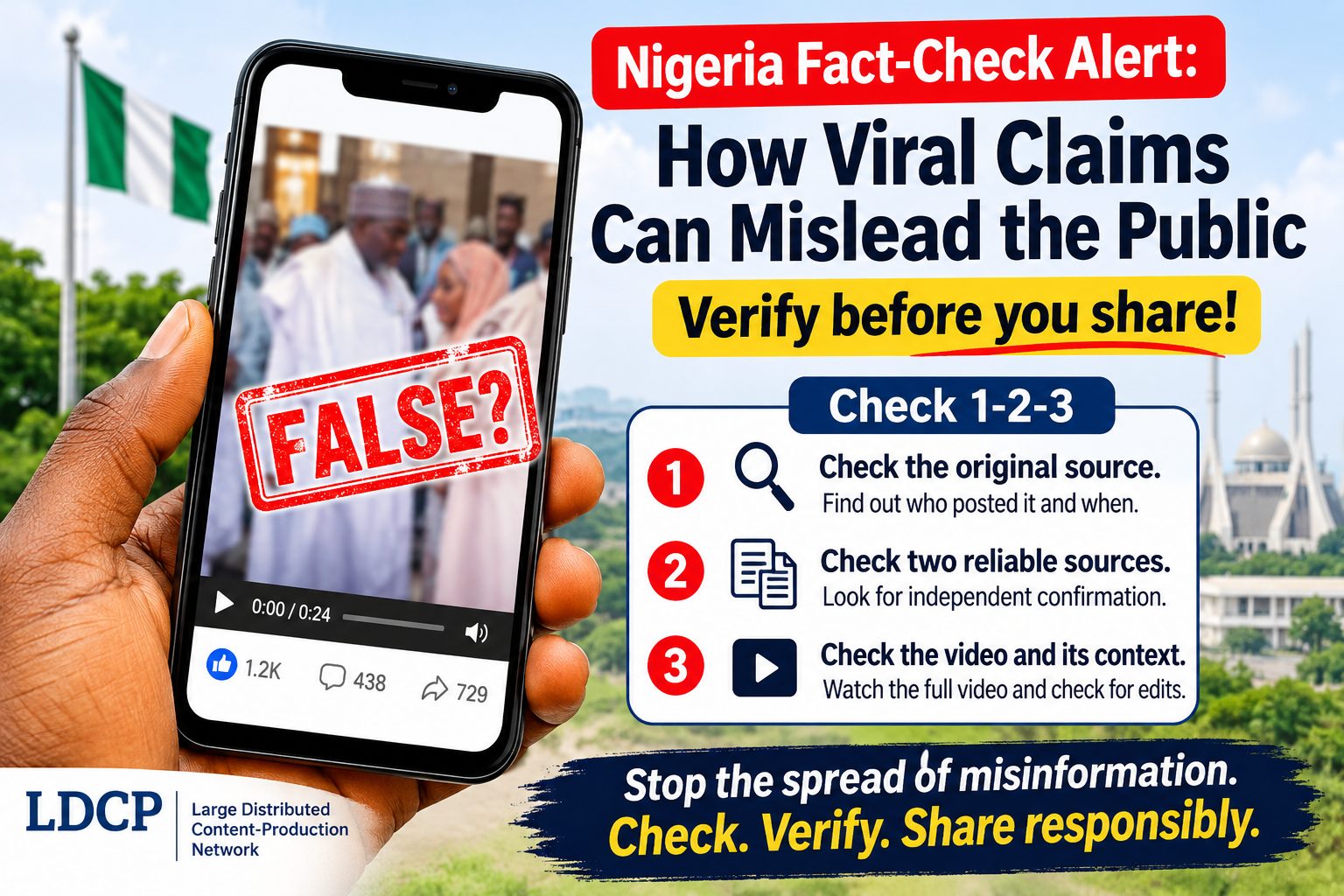
How Readers Can Verify Viral Information: Check 1-2-3
Readers can use this simple three-step method before sharing a viral video or news claim.
- Check the original source.
Find out who first published the video. Look for the original account, publication date and any available full recording. Do not depend only on screenshots or forwarded WhatsApp messages.
- Check two reliable sources.
Look for confirmation from at least two independent and credible sources. These may include official statements, established news organisations and recognised fact-checking platforms. If no reliable confirmation exists, do not present the claim as true.
- Check the video and its context.
Look carefully at the footage. Search for earlier versions of the video using reverse image search or tools such as Google Lens. Check whether the location, date and people shown match the description. Watch the full recording where possible instead of relying on a short edited clip.
Where Nigerians Can Check Information
Nigerians can visit The Gazette's fact-checking page at https://thegazette.ng/ for published fact-check reports. Other useful platforms include Africa Check at https://africacheck.org/ and Dubawa at https://dubawa.org/.
These platforms provide fact-checking resources that can help readers examine claims circulating online.
Conclusion
Social media is useful for sharing information, but it also makes it easy for misleading claims to spread. Nigerians should remember that a popular video is not necessarily proof that its caption is accurate.
Before sharing any information, check the source, look for independent confirmation and examine the full context. If a claim cannot be verified, it is better to wait than to spread information that may mislead others.
Responsible sharing begins with responsible checking. Everyone has a role to play in making Nigeria's online information environment more accurate and trustworthy.
Sources
Version 1.0. Kobo Daily stories are edited before publication and updated as facts change. Spotted an error? Tell our editors.