##**NAFDAC Seals Zuba Market, Seizes Counterfeit Goods Worth ₦300m+**
Abuja — The National Agency for Food and Drug Administration and Control (NAFDAC) has shut down Zuba International Market in the Federal Capital Territory (FCT), Abuja, after seizing counterfeit and unwholesome products…
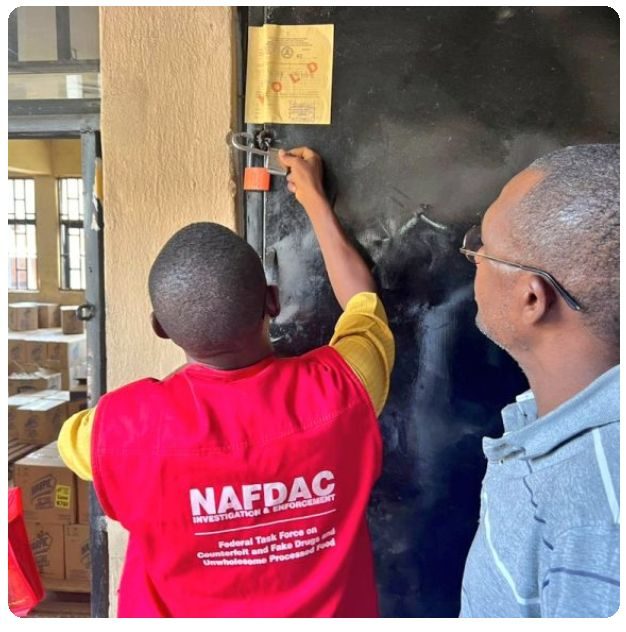
##Abuja — The National Agency for Food and Drug Administration and Control (NAFDAC) has shut down Zuba International Market in the Federal Capital Territory (FCT), Abuja, after seizing counterfeit and unwholesome products valued at more than ₦300 million.
The enforcement operation was carried out on Thursday, November 26, 2026, in collaboration with the Nigeria Police Force and operatives of the Department of State Services (DSS).
According to Channels Television and Premium Times, more than 160 shops and warehouses were screened during the operation. The team also unlocked various shops found to be stockpiling banned and counterfeit products.
The shutdown is part of NAFDAC’s intensified efforts to rid Nigerian markets of counterfeit, substandard, and unwholesome regulated products, particularly ahead of the festive season.
Where the Raid Happened
The raid took place at Zuba International Market, one of the major commercial centres in the FCT, Abuja.
Zuba serves traders, transporters, and shoppers from Abuja and neighbouring states, including Niger, Kaduna, and Kogi. It is a busy wholesale and retail hub, especially for drinks, food items, and household goods. That heavy traffic is one of the reasons NAFDAC says it is a priority market for enforcement.
During the operation, officials moved from shop to shop and warehouse to warehouse. Some shops were unlocked by the enforcement team after they were found to contain stockpiles of prohibited products.
Speaking after the operation, the Head of NAFDAC’s Investigation and Enforcement Division, North-Central Zone, Pharm. Babatunji Omoyeni, said the exercise reflected the agency’s renewed commitment to protecting the health and safety of Nigerians.
He said the operation followed weeks of intelligence gathering and surveillance, and intelligence reports on the sale and distribution of prohibited products in the market.
What Was Seized
NAFDAC did not list brand names in the reports reviewed. It listed categories of products. The products seized included:
1. Prohibited alcoholic beverages in small packs
The largest category was alcoholic beverages packaged in sachets and PET bottles below 200 millilitres. Officials specifically mentioned alcoholic drinks packaged in 50ml and 100ml sachets, as well as other small-sized containers.
2. Counterfeit products
NAFDAC seized products described as counterfeit — products presented to look like genuine, regulated products, but which were not genuine.
3. Unregistered wines
The agency also reported the seizure of unregistered wines found in the market.
4. Expired products
Expired goods were also found among the items confiscated during the screening.
5. Fake labelling materials
In some shops, officials found fake labelling materials, which are used to repackage or mislabel products to deceive buyers.
6. Other counterfeit, substandard, and unwholesome regulated products
Beyond the categories above, NAFDAC described the wider seizure as counterfeit, substandard, and unwholesome regulated products.
In total, the value of the confiscated products was estimated at over ₦300 million.
Describing the quantity recovered from one of the warehouses as alarming, Omoyeni said the agency would investigate the owners of the affected warehouses and shops, document the confiscated items, and gather evidence for possible prosecution.
Why NAFDAC Is Acting Now
The timing of the raid was not accidental. NAFDAC said the operation was part of its efforts to prevent counterfeiters and other unscrupulous operators from exploiting the increase in commercial activities and consumer demand during the yuletide season.
In January 2026, NAFDAC began enforcing a ban on alcoholic beverages packaged in sachets and PET bottles below 200 millilitres. This followed the expiration of a five-year moratorium granted to manufacturers to phase out the products.
The Zuba raid is an enforcement of that ban.
NAFDAC’s Director-General, Prof. Mojisola Christianah Adeyeye, had given the Enforcement Directorate a clear directive to ensure that counterfeiters do not have a field day, especially during the festive season when demand rises sharply.
The Zuba operation also follows a recent large-scale destruction exercise. NAFDAC recently destroyed fake, expired, banned, substandard, and falsified products valued at about ₦100 billion in Ogun State. That context shows that the Zuba raid is part of a broader national campaign, not an isolated action.
What Traders Said
The raid came as a surprise to some traders in the market.
An official of the market, Calvin Henry, who identified himself as the Vice Chairman of the Traders Association, told journalists that the coming of NAFDAC’s enforcement team was a surprise to them, as such a raid had not happened before in Zuba Market.
His comment highlights a key tension in enforcement. For regulators, a surprise raid is necessary to catch violators. For traders, it disrupts business, even for those who may not have been selling prohibited products.
NAFDAC has not said when the market will reopen. For now, the market remains shut following the operation.
Why This Matters for Shoppers
Counterfeit and substandard products are not just a legal problem. They are a health problem.
Alcoholic drinks packaged in unapproved small sachets can be difficult to trace. When a product is counterfeit, unregistered, or expired, there is no guarantee of what is inside it. It may contain the wrong ingredients, the wrong strength, or harmful substances.
Unregistered wines and fake labelling materials are also dangerous because they deceive the buyer. A shopper may believe they are buying a genuine, regulated product, when they are actually buying a product that has not passed safety checks.
That is why NAFDAC says the festive season is a high-risk period. Demand increases, shoppers rush, prices attract buyers to cheaper alternatives, and counterfeiters take advantage of that rush.
What Shoppers Should Do Now
NAFDAC has urged members of the public to remain vigilant and to provide credible information that can assist the agency in identifying individuals and locations involved in the manufacture, storage, distribution, and sale of counterfeit and unwholesome products.
Based on that advice, shoppers should:
1. Avoid sachet alcohol below 200ml
Do not buy alcoholic beverages in sachets or PET bottles below 200ml. Those products are now prohibited. If you see them on sale, do not buy them.
2. Check the label carefully
Look for a proper NAFDAC registration number, manufacturer’s name and address, batch number, manufacturing date, and expiry date. If any of these are missing, blurred, or look tampered with, do not buy the product.
3. Avoid suspiciously cheap products
If a drink or product is far cheaper than the same product elsewhere, treat it as a warning sign. Counterfeiters often use low prices to attract buyers.
4. Do not buy from unapproved sources
Buy regulated products from reputable shops and supermarkets, not from hawkers, roadside stalls, or shops that cannot explain the source of their stock.
5. Report suspicious products
If you see prohibited sachet alcohol, unregistered wines, expired products, or fake labelling, report it to NAFDAC. Provide the name of the market, the shop location if you know it, and a description of the product. Do not confront sellers yourself.
6. Do not consume products you suspect are fake
If you have already bought a product and you suspect it is counterfeit or expired, do not drink or use it. Keep the container and label, if possible, as evidence for a report.
What Traders Should Do Now
Traders, especially those in Zuba and other major markets, should treat the raid as a warning.
1. Remove all prohibited stock immediately
Any alcoholic beverage in sachets or PET bottles below 200ml should be removed from shelves. Do not hide it. Do not sell it under the counter. The ban is in force.
2. Check your suppliers
Only buy from authorised distributors who can provide invoices and proof of registration. If a supplier cannot provide documents, do not buy from them.
3. Check expiry dates and labels
Remove expired products from your shop. Do not re-label, repackage, or alter labels. Fake labelling materials are a serious offence.
4. Do not stock unregistered wines or products
If a product has no NAFDAC registration, do not stock it, no matter how profitable it appears.
5. Cooperate with enforcement officers
If NAFDAC visits your shop, cooperate, provide documents, and allow inspection. Obstruction can lead to prosecution, even if your own stock is clean.
6. Keep records
Keep purchase invoices, supplier contacts, and stock records. If a product in your shop is found to be counterfeit, your records will help prove where you bought it and whether you acted in good faith.
7. Inform your association
Work through your traders’ association to seek clarification from NAFDAC on what is allowed, when the market will reopen, and what conditions must be met for reopening.
What Happens Next
NAFDAC says surveillance and inspections will continue.
The next steps, according to Omoyeni, are to investigate the owners of the affected warehouses and shops, document the recovered products, and gather evidence for possible prosecution.
That means the Zuba raid is not the end of the process. It is the beginning of investigations that could lead to charges against those found to be manufacturing, storing, or distributing prohibited products.
For the market itself, reopening will depend on NAFDAC’s assessment and the cooperation of traders in removing prohibited products and complying with regulations.
Conclusion
The shutdown of Zuba International Market and the seizure of products worth over ₦300 million is one of the largest market enforcement operations of the festive season.
It shows that NAFDAC is moving from warnings to action, particularly on the ban on alcoholic beverages below 200ml.
For shoppers, the message is simple: be vigilant, check labels, avoid prohibited sachet alcohol, and report suspicious products.
For traders, the message is equally clear: remove prohibited stock, buy only from legitimate suppliers, and keep proper records.
The festive season should be a time of celebration, not a time of avoidable illness from counterfeit and unwholesome products.
Sources used: Channels Television and Premium Times reports on the NAFDAC raid at Zuba International Market, November 26, 2026.
Version 1.0. Kobo Daily stories are edited before publication and updated as facts change. Spotted an error? Tell our editors.