##**Danfo to Data: DMly's Push for Social Sales in Nigeria**
How a Nigerian startup wants to turn WhatsApp and Instagram chats into real shops for small businesses. By [Stephen. E. O] For millions of Nigerians, the shop is no longer on the street. It is in a chat. You see a wig on…
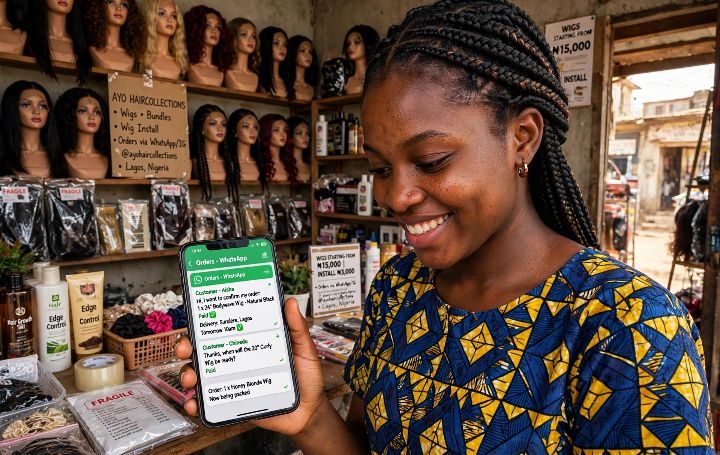
##How a Nigerian startup wants to turn WhatsApp and Instagram chats into real shops for small businesses.
By [Stephen. E. O]
For millions of Nigerians, the shop is no longer on the street. It is in a chat.
You see a wig on Instagram. You comment, "How much?" The seller says, "DM me." You move to WhatsApp. You ask for price, delivery, and size. Then you wait.
Sometimes the reply comes in five minutes. Sometimes in five hours. Sometimes it never comes.
That is the everyday reality of social selling in Nigeria — and it is the problem DMly is in the news for trying to solve.
DMly is a startup built for Nigerian businesses that sell where their customers already are: on WhatsApp and Instagram. Its promise is simple: turn chats into sales, bookings, and repeat customers, and let DMly handle the follow-ups while the owner runs the business.
What The Product Does?
DMly is not another social media app. It is a WhatsApp CRM and automation platform that sits behind the apps a business already uses.
It brings WhatsApp, Instagram, Messenger, TikTok, Telegram, SMS, Google Business and website live chat into one place — one shared team inbox.
Instead of one phone being passed around a shop, the whole team can see the same conversation, with the full history. No one has to ask, "Who is this customer? What did she order last time?"
Inside that one inbox, DMly does four things that matter to a small business:
1. It replies instantly, day and night
DMly's AI agent answers the usual questions and keeps the conversation moving towards a sale.
A customer asks at 11pm: "Do you have crayfish? How much is delivery to Port Harcourt?" The AI replies immediately with the price list, opening hours, and availability — using the business's own prices and services.
The owner sets it up in three steps: connect your channels, add your services, prices, opening hours and booking availability so the AI answers exactly like your best staff member, then let the conversations flow. The team steps in only when a human is really needed.
2. It turns comments into DMs
This is where many Nigerian sellers lose sales.
A person comments "How much?" under an Instagram post. The seller replies "DM me." The person never DMs.
DMly fixes that. When someone comments, DMly replies privately with the price list, and moves the details to DM. The public comment gets a fast reply, so everyone sees the business is responsive, and the real selling happens privately.
For a hair vendor in Lagos, a thrift seller on TikTok, or a baker in Port Harcourt, that one automation can be the difference between a like and a sale.
3. It books and collects payment inside the chat
DMly allows bookings, reminders and follow-ups in one place, with a deposit before the slot is held.
A customer can book an appointment, get a reminder, receive an invoice, and pay — all from the same thread.
Payments are collected in naira through Paystack and Flutterwave, by card or bank transfer. The company gives an example: Invoice #2841, Consultation ₦25,000, Paid.
Think of what that replaces. The old way: "Send account number." "Send proof of payment." A blurry screenshot. The seller checking a bank app, confused.
The new way: Send a payment link. Customer pays. DMly marks it paid. No screenshot, no argument.
This works for the businesses that keep Nigeria moving: salons, clinics, coaches, retail stores, schools, real estate agents, caterers, photographers, and service businesses.
4. It brings customers back
A sale is not the end. DMly helps businesses send offers, updates and reminders to everyone who opted in, on the official WhatsApp API.
A food vendor who sells on Fridays can message her 1,180 past customers: "Weekend offer — ready for your next appointment?" A salon can remind a customer that her appointment is tomorrow. A school can remind parents about fees.
The whole journey becomes one connected flow: Discover, Chat, Book and Pay, Visit and Review, Bring Them Back, Broadcast. From an Instagram comment to a WhatsApp booking, and every visit after.
The Problem It Wants To Solve For Small Businesses
DMly is not solving a technology problem. It is solving a time, trust, and organisation problem.
First, too many chats, too little time.
A successful small business in Nigeria is punished for being successful. The more popular you are, the more DMs you get. The more DMs you get, the slower you reply. A buyer who waits a day often buys from someone else.
A tailor in Aba might get 100 DMs a day while also cutting cloth and measuring customers. He cannot answer all 100. DMly answers the boring 80% — price, sizes, delivery, opening hours — so the human can focus on the important 20%: closing the sale and building relationship.
Second, no memory, no records.
When everything lives in scattered chats across five phones, there is no memory. Who bought last month? Who asked but never paid? Who wanted the red one?
DMly gives the business a memory. Every conversation is in one place, with context, so any staff member can pick it up.
Third, selling in dollars, earning in naira.
Many foreign tools are priced in dollars, built for US businesses, and hard to pay for from Nigeria. DMly is deliberately local.
It is priced in naira, with plans from ₦29,000 a month, and Meta's message costs explained in naira before you send. It runs on Meta's official WhatsApp Business API, on your own number — not a workaround that can get your number banned. For a business that depends on one WhatsApp number for all its income, that official status is survival, not a detail.
And you can reach a person. DMly lists a Nigerian support line: 0806 121 1164. When your shop is down, you want to talk to someone, not a bot.
Why Social Selling Matters Now?
Three changes have come together to make this moment important.
1. The shop has moved to the phone.
Nigerians no longer discover businesses by walking around the market. They discover them on Instagram Reels, TikTok, WhatsApp Status, and Facebook. A small brand in Port Harcourt can be found by a buyer in Abuja, Kano, or London without ever opening a physical shop.
But discovery without conversion is just likes. 10,000 views and zero sales means you entertained, you did not sell. Social selling matters because it turns discovery into income.
2. Customers now expect instant replies.
Customers compare a small seller not to another small seller, but to Jumia, Bolt, and their bank app. They expect instant reply, instant booking, instant payment confirmation.
They do not care that you are one person. If you reply in five minutes, you will beat a competitor with better products who replies in five hours. Speed is now a product.
Most Instagram sales in Nigeria still start in the DMs or comments. Treat them like a customer walking into your shop — because that is what they are.
3. Small and big now compete in the same feed.
On Instagram, a big fashion brand and a small thrift vendor appear in the same feed, the same size. The small vendor can win — but only if she can reply as fast, book as easily, and collect payment as smoothly.
That is what DMly is betting on. Social selling has levelled the field. Tools that organise the chat help keep it level.
What It Looks Like In Real Life?
For Mama Nkechi, foodstuff seller in Mile 1: A customer messages at 10pm asking for crayfish. Instead of waiting till morning, DMly replies with the price list. The customer orders. Mama Nkechi wakes up to a paid order.
For Tunde, tailor in Yaba: A customer comments "How much?" under his latest agbada post. DMly sends the price list privately. The customer books a measurement appointment. Tunde collects a deposit before cutting cloth. No more no-shows.
For Adaeze, hair vendor: She no longer copies and pastes her price list 50 times a day. DMly sends it automatically, takes the booking, collects payment, and sends a reminder. She spends her day doing hair, not typing.
In each case, the business does not change what it sells. It changes how it handles the chat. And in Nigeria today, the chat _is_ the business.
From Danfo To Data
For decades, Nigerian commerce ran on danfo logic: shout loudest, move fastest, be where the crowd is. It was physical, loud, and personal.
Now it runs on data logic: reply fastest, remember best, follow up smartest. It is still personal — but it is also organised.
DMly sits exactly at that crossing point. It does not ask a Nigerian trader to become a tech company. It asks her to keep selling where she already sells — WhatsApp and Instagram — but to sell with the tools of a bigger company.
If it works, the impact is not just more sales for one shop. It is more stable income for millions of people who have never had a website, never had a POS system, and never had a secretary — but have always had customers in their DMs.
The danfo is still there. But now, behind it, there is data.
FACT BOX: What is DMly?
What: A WhatsApp CRM for Nigerian businesses. It answers customers automatically, takes bookings and payments in the chat, follows up, and keeps every conversation in one team inbox
- Channels: WhatsApp, Instagram, Facebook, TikTok, Telegram, SMS, Website chat
Key features: AI instant replies, team inbox, bookings and reminders, invoices, Paystack and Flutterwave payments in naira, broadcasts, comment-to-DM
Pricing: Plans from ₦29,000 a month. 7-day free trial, no credit card required
Contact: Call or WhatsApp 0806 121 1164
Caption: For many Nigerian traders, WhatsApp is the shop front. DMly wants to make that shop front work like a real shop.
Source: The Guardian Nigeria, DMly official product information (dmly.io)
Sources
Version 1.0. Kobo Daily stories are edited before publication and updated as facts change. Spotted an error? Tell our editors.