BOI SETS ASIDE 10% OF FUNDING FOR GREEN PROJECTS IN NIGERIA
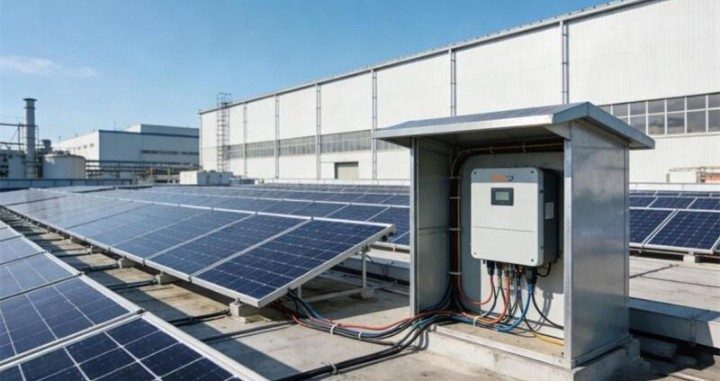
The Bank of Industry (BOI) says it will direct at least 10 per cent of its financing interventions towards climate-friendly and sustainability-focused projects under its 2025–2027 corporate strategy, as Nigerian businesses face growing pressure to reduce production costs and adopt more sustainable operations.
The commitment covers renewable energy, climate-smart agriculture and energy-efficient manufacturing, with the development finance institution seeking to support businesses investing in cleaner technologies and more efficient production systems.
BOI Managing Director and Chief Executive Officer, Dr Olasupo Olusi, announced the allocation at the bank's second Sustainability Conference in Lagos on Wednesday, November 18, 2026.
Olusi said rising energy costs, climate-related disruptions, resource constraints and changing global market expectations had made sustainability increasingly important to business survival and industrial competitiveness.
He also stressed that financing alone would not deliver the transition. Businesses must embrace innovation and strengthen governance to make sustainability part of their commercial strategies.
SECTORS TARGETED BY BOI'S GREEN FINANCING
The bank's commitment focuses on three areas with direct implications for Nigeria's industrial and agricultural development.
Renewable energy is one priority. Businesses investing in solar power and other renewable energy solutions could access financing to reduce their dependence on conventional electricity and expensive alternative power sources.
Energy-efficient manufacturing is another target. Factories investing in efficient machinery, cleaner production processes and improved energy management could reduce operating expenses and improve productivity.
The third area is climate-smart agriculture. This includes approaches that improve resource efficiency, reduce waste and help agricultural businesses respond to climate-related disruptions.
The Federal Ministry of Industry, Trade and Investment has also called for stronger green financing and technical support, particularly for small and medium-sized enterprises (SMEs).
Speaking at the conference, the ministry's Permanent Secretary, Dr Christopher Isokpunwu, described sustainability as a business imperative, saying, "Simply put, green business is increasingly smart business."
He said sustainability increasingly influences access to capital, operational efficiency, market access and competitiveness.
WHY GREEN BUSINESSES STILL STRUGGLE TO GET FUNDING
Having a strong environmental and social record does not automatically make a business eligible for financing.
Jackie Amprou, Nigeria Country Manager of Agence Française de Développement (AFD), identified project bankability, institutional and technical capacity, and actual or perceived financial risks as obstacles preventing businesses from securing funding for green investments.
For an ordinary business owner, this means that adopting solar energy or introducing cleaner production methods may not be enough to secure a loan. The business must also demonstrate that its proposed project is financially viable, that it has the technical capacity to implement it and that the risks can be managed.
AFD is working with BOI through the Transforming Financial Systems for Climate programme. The partnership includes a €100 million non-sovereign credit facility co-financed by AFD and the Green Climate Fund, alongside a €2.5 million technical assistance grant.
The facility supports climate mitigation and adaptation projects, while the grant is intended to strengthen BOI's climate strategy, risk management and capacity to identify and finance eligible investments.
BOI is also working with development partners, including the German development agency GIZ and the Africa Guarantee Fund, to mobilise climate finance and reduce funding barriers.
WHAT THIS COULD MEAN FOR JOBS AND FACTORIES
Lower energy costs and more efficient production could make Nigerian factories more competitive. Businesses that reduce operating expenses may have more room to expand production, invest in equipment and strengthen their supply chains.
This is analysis, not a commitment from BOI. If financing leads to new factories, expanded production or renewable energy installations, demand could increase for workers in manufacturing, engineering, installation, maintenance and agricultural processing.
BOI has a separate target under its 2025–2027 strategy to create and sustain three million jobs, increase annual lending to N1.85 trillion and provide financing to 24,000 micro, small and medium-sized enterprises (MSMEs) by 2027.
The 10 per cent allocation is a financing commitment under the bank's strategy; it does not mean that the money has already been disbursed or that specific projects have received approval.
For businesses seeking climate finance in Nigeria, the practical challenge remains turning sustainability plans into projects that lenders consider bankable, technically sound and financially viable.
Version 1.0. Kobo Daily stories are edited before publication and updated as facts change. Spotted an error? Tell our editors.