## Africa's Electric Vehicle Revolution Is Taking Shape on Two Wheels, Not Four
Africa's electric vehicle (EV) revolution is taking a different direction from the one seen in wealthier parts of the world. Rather than focusing mainly on expensive electric cars, the continent is increasingly embracing…
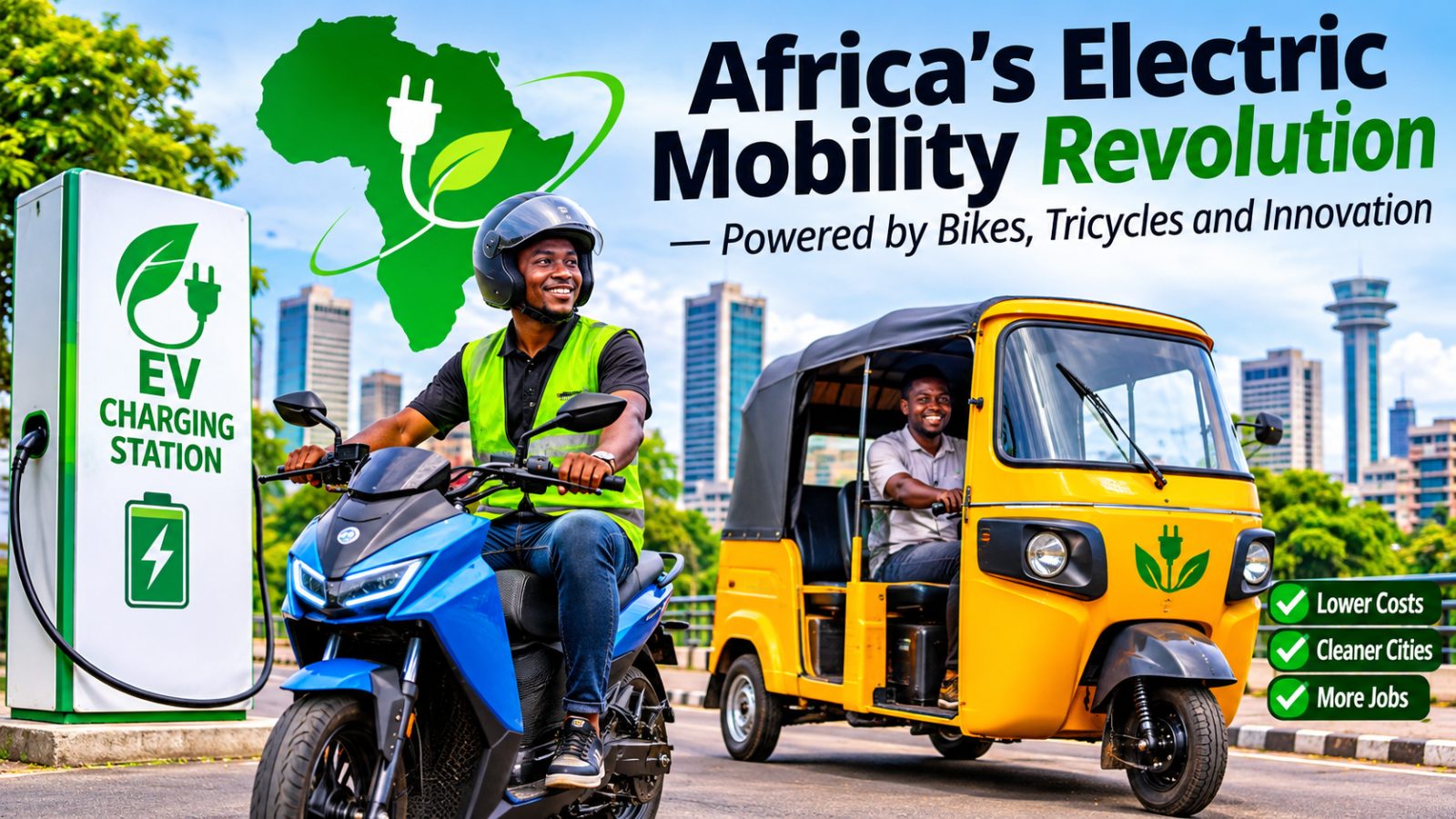
Africa's electric vehicle (EV) revolution is taking a different direction from the one seen in wealthier parts of the world. Rather than focusing mainly on expensive electric cars, the continent is increasingly embracing electric motorcycles, bicycles and three-wheelers as practical solutions to transportation challenges, rising fuel costs and environmental pollution.
According to a recent report by The Associated Press (AP), electric two-wheelers and three-wheelers are gaining popularity across African communities, particularly in areas where conventional transportation is expensive, unreliable or difficult to access.
The development highlights how Africa could embrace electric mobility through vehicles that directly support people's everyday activities and livelihoods.
Why Electric Bikes and Tricycles Fit African Cities
Across many African cities, motorcycles and three-wheelers play an important role in daily transportation. They are used for passenger services, food deliveries, transportation of goods and movement through congested streets.
Unlike electric cars, which often require expensive charging infrastructure, smaller electric vehicles generally need less space and can operate with simpler charging arrangements.
In Zimbabwe, social enterprise Mobility for Africa introduced solar-powered electric tricycles in 2019 to support rural communities, particularly women farmers.
One beneficiary, farmer Agefi Mutambo, explained that owning an electric tricycle transformed her agricultural activities by allowing her to transport significantly more produce to markets.
The vehicles can carry more than 400 kilograms and travel approximately 100 kilometres on a single charge. Their battery-swapping system also allows users to exchange depleted batteries for charged ones without waiting for lengthy charging periods.
The Business Opportunity Behind Electric Mobility
Beyond environmental benefits, the growing interest in electric motorcycles and tricycles is largely driven by business economics.
For commercial riders, fuel is one of the major daily expenses. Electric motorcycles offer an opportunity to reduce these costs because they do not depend on petrol and generally require less routine maintenance.
Battery-swapping systems make operations easier, especially for commercial riders who depend on their vehicles for daily income.
According to AP, an electric three-wheeler operating as a taxi in Mombasa, Kenya, could save approximately $4 to $10 daily in running costs compared with a petrol-powered alternative.
These savings make electric mobility attractive to delivery companies, transport operators, farmers and small business owners.
Jobs and Transportation Costs
The expansion of electric mobility could create employment opportunities across Africa.
Potential opportunities include:
- Vehicle assembly
- Electrical engineering
- Battery production
- Vehicle maintenance
- Sales and distribution
- Development of charging infrastructure
The International Energy Agency's Global EV Outlook 2026 highlights the growing role of battery-swapping networks and electric motorcycles in Africa, with businesses expanding their operations across several countries.
However, the transition also faces challenges, including unreliable electricity, limited charging infrastructure, high initial vehicle costs and inadequate financing.
Governments and private investors will therefore need to support affordable financing, technical training and reliable battery-swapping networks.
What This Means for Africa's Future
Africa's electric vehicle transition does not necessarily have to begin with luxury cars. Affordable electric motorcycles and three-wheelers could provide a more realistic starting point because they already serve important transportation and commercial needs.
If properly supported, the sector could reduce operating expenses, improve access to transportation, create employment and contribute to cleaner urban environments.
Ultimately, Africa's electric mobility revolution may be driven not by the cars people dream of owning, but by the motorcycles and tricycles that help millions earn a living every day.
Version 1.0. Kobo Daily stories are edited before publication and updated as facts change. Spotted an error? Tell our editors.